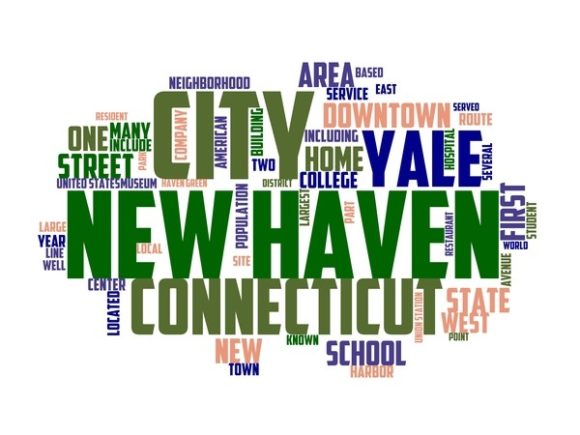
New Haven Typography Banner
The New Haven Typography Banner is a versatile, hand-drawn wordcloud built around expressive, colorful lettering—designed not as static decoration, but as a functional design asset. It’s not just about aesthetics; it’s about utility across physical and digital workflows. Whether you’re launching a small-batch apparel line, preparing a classroom resource, designing packaging for a local product, or building a brand identity from scratch, this banner serves as both visual anchor and practical toolkit.
Unlike generic clipart or overused vector fonts, the New Haven Typography Banner carries intentional rhythm and warmth. Its hand-drawn quality introduces human texture without sacrificing clarity—making it legible at scale on posters and subtle enough for delicate applications like notebook covers or jewelry engraving. The color palette is balanced for print and screen: vibrant where needed, muted where restraint supports readability. That balance matters when moving between mockups, proofs, and final output.
Where It Fits in Your Workflow
You don’t need to wait until the “design phase” to bring in the New Haven Typography Banner. In fact, its greatest value often emerges earlier—in planning, ideation, and alignment stages.
For educators developing a unit on creative writing or typography, the banner can serve as a visual syllabus anchor—printed large for classroom walls or embedded into slide decks to reinforce thematic vocabulary. For marketers drafting a campaign around authenticity or community, it becomes a quick reference for tone consistency: words like “genuine,” “together,” “create,” and “belong” aren’t just decorative—they’re strategic touchpoints that shape messaging across emails, social posts, and landing pages.
Entrepreneurs prototyping product lines use it during material testing. Because the wordcloud is layered—not fused—you can isolate individual words or clusters to test layout options on fabric swatches, ceramic mug mockups, or woven label samples. This avoids costly reprints later. Designers working with clients appreciate how easily it bridges conversation: instead of describing abstract concepts like “approachable energy” or “thoughtful vibrancy,” they point to the banner’s composition and say, “This is the feeling we’re anchoring to.”
Integration Across Tools and Platforms
The New Haven Typography Banner works seamlessly with common creative tools—but only if prepared correctly. It ships in multiple formats: high-resolution PNG (with transparent background), vector-based SVG, and layered PSD files. Each serves a distinct purpose.
- PNG: Best for quick drag-and-drop into Canva, Google Slides, or email newsletter builders. Use when speed matters more than scalability—like generating social media banners or printable workshop handouts.
- SVG: Ideal for web use, especially responsive layouts. Embed directly into HTML or CSS backgrounds. Since it’s vector-based, it stays crisp on retina displays and scales cleanly across device sizes—critical for e-commerce product pages or digital invitations.
- PSD: Essential for detailed customization. Layers are named and grouped logically (e.g., “Primary Words,” “Accent Shapes,” “Background Texture”), allowing designers to adjust opacity, recolor individual elements, or swap out words without redrawing. This is where long-term adaptability lives.
It also interoperates well with production partners. Print shops accept the PDF/X-4 version without font substitution issues. Embroidery digitizers appreciate the clean outlines and consistent stroke weights—no jagged edges or unintended gaps. Even textile designers using Spoonflower or Printful find the file structure intuitive for tile-based repeats or center-aligned motifs.
Practical Implementation Tips
Start with context—not color. Before selecting which words to highlight or which hue to emphasize, ask: What action should this inspire? A workshop flyer needs clarity and urgency. A yoga studio pillow aims for calm and invitation. A science fair poster leans into curiosity and precision. The New Haven Typography Banner supports all three—but only if used with intention.
Here’s how to embed it meaningfully:
- Use it as a consistency checkpoint. After drafting copy for a brochure or website section, paste your headline and subhead next to the banner. Do the tones align? Does “innovate boldly” feel visually supported by the weight and spacing of “boldly” in the cloud? If not, revise copy or adjust hierarchy—not just colors.
- Leverage spacing as structure. The hand-drawn nature includes natural breathing room between clusters. Use those gaps as guides for grid alignment in layout software. Let whitespace in the banner inform margin decisions in your InDesign document or Figma frame.
- Test contrast early—and often. Print a small sample on your intended substrate (e.g., kraft paper tag, cotton tote, matte ceramic). Digital previews lie. A soft peach word may vanish on unbleached fabric. A deep navy might bleed on thin paper stock. Adjust saturation or add subtle drop shadows *before* finalizing files.
Long-Term Usability and Quality Control
This isn’t a one-off graphic—it’s a reusable system. To maintain quality over time:
- Store master files in a clearly labeled folder with version notes (e.g., “NewHaven_Banner_v2_CMYK_PrintReady”). Include a simple text file listing color hex/CMYK values and font alternatives (though no fonts are embedded—the design is fully vector-based).
- When adapting for accessibility—such as creating an inclusive classroom poster—use the SVG to add ARIA labels or simplify clusters via grouping. Screen readers won’t interpret decorative wordclouds, but they *can* read intentional, structured text elements pulled from the same source.
- For team use, create a lightweight style guide snippet: two sentences on when to use the full banner vs. isolated words, plus examples of approved pairings (e.g., “Use ‘grow’ + ‘learn’ together for educator materials; avoid pairing with ‘fast’ or ‘instant’”)
Consistency doesn’t mean repetition. You’ll find value in rotating emphasis—using different subsets of the wordcloud across related projects. A wellness brand might spotlight “breathe,” “ground,” and “still” for seasonal packaging, then shift to “move,” “rise,” and “flow” for spring programming. The underlying visual language remains cohesive, but the message evolves—without needing new assets.
Real-World Workflow Examples
A freelance illustrator launching a stationery line: She uses the New Haven Typography Banner as her primary logo lockup on business cards and packaging. Then, she extracts “sketch,” “story,” and “slow” for limited-edition greeting cards—each printed on textured paper with soy-based ink. The banner ensures every item feels part of the same world, even when formats differ.
A university department redesigning orientation materials: Their team pulls the banner into a shared Figma library. They build reusable components: a “Welcome” variant (larger central words, softer edges), a “Resources” variant (tighter cluster, higher contrast), and a “Connect” variant (circular arrangement). Staff insert these into templates without design training—keeping messaging unified across 12 departments.
A craft distillery labeling its small-batch gin: They overlay the banner’s “botanical,” “small,” and “true” onto matte black bottle tags—then use the same words, resized and rearranged, on tap handles and cocktail napkins. No new illustrations required. Just smart reuse grounded in visual continuity.
The New Haven Typography Banner earns its place not by being everywhere, but by fitting precisely where it’s needed—supporting decisions, streamlining revisions, and holding space for meaning without demanding attention. It works because it’s designed for doing, not just displaying.