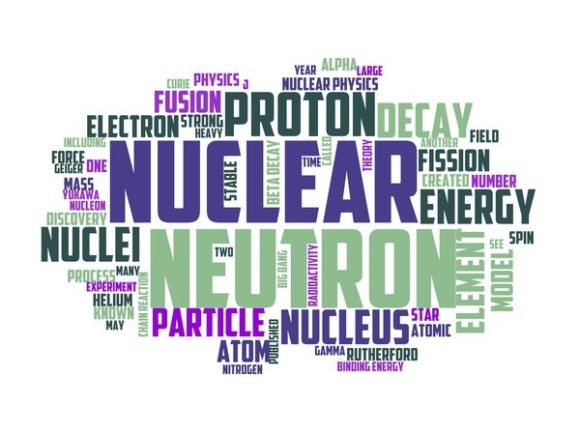
Nuclear Scientist Typography Banner
Typography banners rooted in scientific themes—especially those evoking nuclear physics—occupy a distinctive niche in creative design. The Nuclear Scientist Typography Banner stands out not as literal lab documentation, but as a thoughtfully composed typographic asset that merges precision, curiosity, and visual rhythm. It’s designed for creators who need more than decorative flair: they need resonance, clarity, and thematic cohesion—particularly when communicating ideas around innovation, research, education, or technical excellence.
A Purpose-Built Typographic Resource
This banner isn’t generated from algorithmic word-salad or AI-driven randomness. Its letterforms are hand-drawn with intentional variation—slight tapering on stems, subtle weight shifts, and consistent baseline alignment—that conveys both human craftsmanship and scientific discipline. The color palette leans into deep cobalt, warm amber, soft graphite, and clean white—tones associated with reactor diagrams, periodic tables, and lab notebooks—not because they’re trendy, but because they support legibility and thematic authenticity across print and digital applications.
Unlike generic science-themed fonts or clipart bundles, the Nuclear Scientist Typography Banner functions as a complete compositional unit. It includes balanced negative space, scalable vector outlines (typically delivered in SVG and high-res PNG), and layered source files (often in AI or EPS) that allow for selective editing—say, isolating “fission,” “quantum,” or “reactor” for use in a conference program header or course syllabus footer.
Where It Excels in Real-World Use
In practice, the Nuclear Scientist Typography Banner performs well where thematic consistency matters more than literal illustration. A university physics department used it across orientation materials—on welcome banners, digital slide decks, and printed handouts—replacing stock imagery of atoms or reactors with typography that felt grounded, intelligent, and quietly confident. Similarly, an independent science communicator integrated it into a limited-run zine series about women in nuclear engineering; the banner appeared on cover wraps and chapter dividers, reinforcing voice and authority without leaning on cliché visuals.
Its strength lies in restraint. There are no cartoonish radiation symbols, no exaggerated sparks or explosions. Instead, it relies on typographic nuance—kerning adjusted to echo atomic spacing, ascenders subtly elongated like particle trails, and terminals shaped to suggest controlled energy release. That restraint translates directly to versatility: it scales cleanly from business card text (at 8 pt) to 48-inch trade show backdrops without pixelation or ambiguity.
Quality and Technical Reliability
The asset is consistently delivered as production-ready. Vector files retain crisp edges at any size. Raster variants include transparent-background PNGs optimized for web use (under 300 KB at 2000 px width) and CMYK-embedded TIFFs suitable for offset printing. Color values are documented in Pantone, HEX, and CMYK—not just named (“atomic blue”)—so brand managers can match across vendors and substrates reliably.
Typography accuracy is verified against Unicode standards. Accented characters (e.g., “résonance,” “núcleo”) render correctly in multilingual layouts. Ligatures and contextual alternates are included where appropriate—not as stylistic flourishes, but to maintain optical balance in dense settings like conference programs or academic posters.
Flexibility Without Compromise
While many typographic banners sacrifice adaptability for aesthetic unity, the Nuclear Scientist Typography Banner supports modular reuse. Designers report extracting individual words—“neutron,” “decay,” “isotope”—to build custom headers for workshop handouts or lab safety signage. Others layer it over subtle gridded backgrounds (inspired by neutron diffraction patterns) or pair it with monochrome line art of circuit boards or crystal lattices—enhancing context without visual competition.
It integrates smoothly into broader design systems. One engineering consultancy embedded it into their internal presentation template as a slide footer element—always appearing in the same position and weight, reinforcing institutional identity without dominating content. Another educator used it as a recurring motif in a semester-long MOOC on nuclear policy, applying it only to module title slides—creating rhythm and expectation without repetition fatigue.
Who Benefits Most—and When
Professionals who regularly bridge technical subject matter with public-facing communication will find the most immediate utility. This includes:
- Science educators developing curriculum materials, lecture decks, or museum exhibit labels;
- Research institutions producing annual reports, grant proposals, or outreach campaigns;
- Technical publishers designing covers and interior elements for journals, textbooks, or e-books;
- Freelance designers building branded assets for STEM startups, think tanks, or policy advocacy groups;
- Small-batch makers applying it to apparel, enamel pins, or notebook covers—where thematic specificity builds audience connection.
It’s less suited for projects requiring photorealism, rapid iteration across dozens of unrelated themes, or strict adherence to corporate font families (e.g., pairing with Helvetica Neue in regulated environments). If your workflow depends on auto-generated variants or AI-assisted layout suggestions, this banner won’t integrate with those tools—it’s meant for deliberate, human-led composition.
Practical Considerations for Implementation
Before licensing or downloading, assess your output requirements. If you’re preparing for large-format textile printing (e.g., tote bags or lab coat embroidery), confirm the file includes expanded strokes and outlined text—avoiding rendering inconsistencies on fabric plotters. For digital use, test contrast ratios against background colors using WCAG-compliant tools; the default cobalt/white combination meets AA standards at 14 pt and above, but amber-on-white may require adjustment for accessibility compliance.
Also consider linguistic scope. While English terminology dominates the core banner (“half-life,” “criticality,” “cross-section”), some versions include bilingual variants or modular add-ons—like Latin-derived prefixes (“trans-,” “sub-,” “ultra-”)—that extend usability for international academic collaborations or multilingual event branding.
Long-Term Value and Workflow Fit
Over time, the Nuclear Scientist Typography Banner demonstrates durability—not as a trend-chasing graphic, but as a foundational element. Teams report reusing it across multiple project cycles (e.g., three years of conference branding or successive grant renewals) without audience fatigue, largely because its visual language remains anchored in real-world reference points rather than fleeting aesthetics.
Its value compounds when treated as part of a larger toolkit—not a standalone solution, but one component among calibrated assets: a complementary icon set based on particle physics notation, a grid system derived from crystallographic symmetry, or a data visualization palette aligned with the banner’s hues. Used this way, it supports coherence across touchpoints without demanding uniformity.
For creators balancing authenticity with practicality—those who need to signal expertise without resorting to jargon-heavy visuals or oversimplified metaphors—the Nuclear Scientist Typography Banner offers a rare combination: conceptual rigor, executional polish, and adaptable utility. It doesn’t shout. It clarifies. And in fields where precision carries weight, that distinction matters.