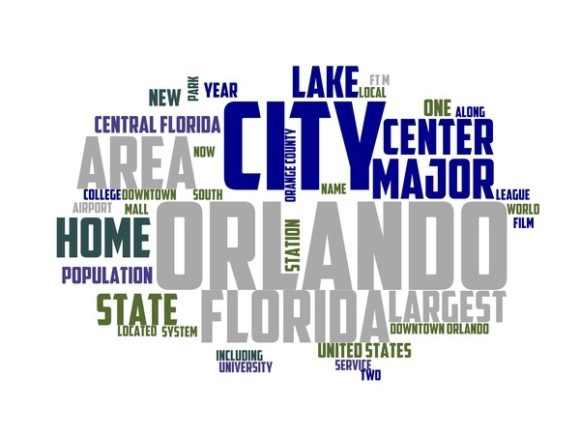
Orlando Typography Banner: A Hand-Drawn Word Cloud for Versatile Creative Projects
The Orlando Typography Banner stands out not as a generic design asset, but as a carefully composed, hand-drawn word cloud built for tangible application. Unlike algorithmically generated clouds or overused vector templates, it features organic line work, intentional color layering, and balanced visual weight—qualities that translate well across physical and digital formats. Its value lies in how thoughtfully it bridges aesthetic appeal with functional adaptability, especially for creators who need expressive typography that holds up at multiple scales and on varied substrates.
What Makes This Word Cloud Distinctive
At its core, the Orlando Typography Banner is a cohesive composition—not just a collection of words stacked for visual density. Each term is drawn by hand, with subtle variations in weight, slant, and spacing that avoid mechanical repetition. The palette uses saturated yet harmonious hues: cobalt blues, warm terracottas, muted sage greens, and creamy off-whites—all chosen to reproduce reliably in both CMYK print and RGB digital displays. No gradients or transparency effects are used, which simplifies file handling and ensures consistency when outputting to fabric, ceramic, or paper.
Its layout prioritizes readability without sacrificing energy. Larger anchor words (like “Create,” “Inspire,” or “Grow”) serve as visual anchors, while smaller supporting terms nest naturally around them—no forced alignment, no rigid grid. This looseness gives the design breathing room and makes it feel human-made rather than AI-generated, a distinction increasingly meaningful to audiences who respond to authenticity in branding and product design.
Practical Applications Across Mediums
Because the Orlando Typography Banner was designed with production in mind, it performs well in contexts where many decorative assets falter. On apparel, for example, its clean outlines and moderate detail scale cleanly down to 4-inch chest prints without blurring or ink bleed. When enlarged for a 36″ × 48″ poster, the hand-drawn texture remains legible and engaging—not pixelated or overly soft.
- Textile & product decoration: Works effectively on cotton tees, linen pillow covers, ceramic mugs, and woven tote bags—especially when printed via screen, DTG, or sublimation.
- Paper-based uses: Holds clarity in letterpress, foil stamping, and offset printing for business cards, invitations, and program booklets.
- Digital integration: Serves as a focal graphic in Canva templates, email headers, ebook chapter dividers, and social media banners—without requiring heavy optimization.
- DIY and craft contexts: Easily cut with Cricut or Silhouette machines for vinyl decals, scrapbook embellishments, or layered stencils.
It’s also structured to allow selective use: individual words can be isolated and recolored without disrupting the overall rhythm, making it adaptable for seasonal campaigns (e.g., swapping “Sunshine” for “Cozy” in fall promotions) or brand-specific messaging.
Who Benefits Most—and Why
Professionals who regularly produce branded collateral—freelance designers, small studio owners, educators developing classroom resources, or boutique retailers launching limited-edition merchandise—find immediate utility in the Orlando Typography Banner. Its strength isn’t novelty for novelty’s sake; it’s reliability paired with character. A marketing manager building a wellness retreat launch kit can use it across welcome banners, participant notebooks, and reusable shopping bags—maintaining visual continuity without licensing complications or custom illustration costs.
Bloggers and content creators also benefit from its flexibility in storytelling. Rather than relying on stock photography or generic icons, they embed the banner into Pinterest pins, printable goal trackers, or workshop slide decks to reinforce thematic messaging (“Focus,” “Balance,” “Renew”) with visual warmth. Educators report success using simplified versions (with selected vocabulary) in elementary literacy centers or high school art curricula—where students analyze composition, color theory, or typographic hierarchy firsthand.
That said, it’s less suited for highly technical or formal applications—think corporate annual reports, legal disclaimers, or data-heavy infographics. Its expressive nature intentionally leans away from austerity or neutrality. If your project demands strict typographic conformity or monochrome precision, this isn’t the primary tool—but it may still serve as a secondary accent element.
Quality, Usability, and Long-Term Value
The file package typically includes high-resolution PNG (transparent background), vector EPS, and layered PSD files—giving users control over editing depth without sacrificing portability. Colors are named and grouped logically in layers, and text elements remain editable in compatible software (though the hand-drawn aesthetic means full re-typing isn’t expected or necessary). There are no embedded fonts to manage or missing links to troubleshoot—reducing setup time significantly compared to multi-file illustration kits.
In real-world testing across print shops and makerspaces, the Orlando Typography Banner consistently required fewer prepress adjustments than comparable hand-lettered assets. Its stroke weights avoid extremes—nothing so thin it vanishes in embroidery, nothing so thick it overwhelms small-format packaging. That balance contributes directly to long-term usability: it doesn’t date quickly, nor does it demand constant stylistic updating to stay relevant.
One practical note: because it’s hand-drawn, absolute symmetry isn’t part of its language. Users accustomed to perfectly centered, mathematically aligned layouts may need a brief adjustment period. But that asymmetry is also what allows it to integrate organically into mixed-media collages, imperfectly printed zines, or handmade greeting cards—contexts where rigidity feels out of place.
Integrating It Thoughtfully Into Your Workflow
Start by auditing your current design system. Does your brand rely heavily on sans-serif minimalism? Then treat the Orlando Typography Banner as a deliberate contrast—perhaps reserved for campaign-specific materials or community-facing touchpoints where warmth and approachability matter most. If your aesthetic already embraces texture and variation, it can become a recurring motif: resized for Instagram story highlights, simplified for favicon use, or animated frame-by-frame for short web videos.
When pairing with photography, opt for images with muted tones or ample negative space—the banner’s vibrancy shines best against calm backdrops. With typography, avoid competing scripts; let it stand alone or pair only with clean, neutral typefaces (e.g., Lato, Inter, or Freight Text) used strictly for body copy or captions.
For teams managing shared assets, consider creating a lightweight usage guide: recommended minimum sizes per medium, approved color overrides, and examples of effective cropping. This helps preserve intent while encouraging adaptation—not rigid reuse.
The Orlando Typography Banner won’t replace foundational brand assets like logos or core color systems. But as a flexible, expressive, production-ready word cloud, it fills a specific and frequently underserved niche: one where inspiration meets execution, and where hand-crafted detail supports—not overshadows—clear communication.