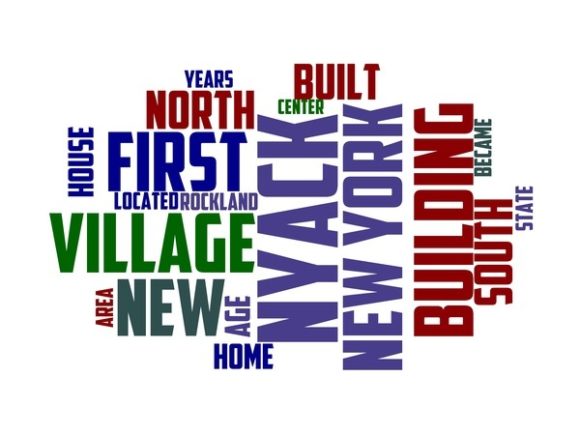
Nyack Typography Sticker: Hand-Drawn Word Cloud Art
Imagine a single design element that breathes personality into your project—whether it’s a handmade greeting card, a boutique clothing tag, or a classroom poster. The Nyack Typography Sticker is exactly that: a vibrant, hand-drawn word cloud built for real-world making. It’s not just decorative—it’s functional, flexible, and deeply expressive. Each word is carefully lettered by hand, then arranged in an organic, balanced composition that feels alive—not algorithmic or sterile. That human touch makes it resonate with audiences who value authenticity and craft.
What Makes This Word Cloud Different
Unlike generic clipart or AI-generated clouds, the Nyack Typography Sticker stands out because of its intentional rhythm and visual warmth. Words flow around each other like conversation—not stacked or forced, but thoughtfully spaced and weighted. Colors are rich but harmonious: think terracotta, sage, mustard, indigo, and soft coral—not neon overload. The result? A design that reads clearly at multiple sizes, from a 1-inch sticker on a notebook to a 24-inch wall poster.
It’s delivered as a high-resolution PNG with transparent background and vector-ready layers (where applicable), so you can scale, recolor, or isolate individual words without quality loss. That flexibility means you’re not locked into one look—you’re given tools to adapt, not just copy.
Creative Uses Across Real Projects
Here’s where practicality meets inspiration. The Nyack Typography Sticker isn’t limited to “stickers” in the literal sense—it’s a foundational graphic asset designed for reuse across physical and digital contexts:
- Clothing & Textiles: Print it on tote bags, t-shirts, or pillow covers—especially effective when paired with minimal fabric backgrounds (off-white linen, oatmeal cotton) to let the colors and lettering shine.
- Promotional Materials: Use it on event banners, workshop flyers, or small-business menus. Educators have applied it to back-to-school welcome posters; yoga studios use it on class schedule boards.
- Stationery & Paper Goods: Layer it onto thank-you cards, wedding programs, or conference name tags. One freelance writer uses it as a subtle watermark behind her printed pitch letters—adding brand warmth without overwhelming text.
- Home & Product Design: Apply it to ceramic mugs via heat transfer, cut it as vinyl for custom wall decals, or embroider key phrases onto linen tea towels using the layout as a guide.
- Digital Publishing: Drop it into ebook chapter headers, magazine feature spreads, or blog post graphics—particularly strong for “about me” pages or mission statements where tone matters as much as content.
Tailoring It for Your Audience and Goals
Who you’re speaking to determines how you use it—and what you emphasize. A small-batch soap maker might highlight words like *hand-poured*, *botanical*, and *slow-made* while muting others. A nonprofit launching a literacy campaign could reposition *read*, *grow*, *imagine*, and *together* at the center, then adjust font weight and color saturation to draw attention.
For marketers: test contrast. Place the word cloud over light vs. dark backgrounds in mockups before final print runs. For educators: pair it with clear, accessible typography elsewhere on the page—don’t compete with it. For crafters: print it on printable sticker paper first, then cut and layer with washi tape or fabric scraps for mixed-media journals.
Consistency matters—but not rigidity. If you’re building a brand kit, consider saving three versions: full-color, monochrome (for embroidery or black-and-white printing), and outlined-only (for coloring books or kids’ activity sheets). That way, one purchase supports multiple outputs without redesigning from scratch.
Getting Started—Without Overcomplicating
You don’t need advanced software to begin. Start simple:
- Identify your core message. What 5–7 words best capture the feeling or purpose of your project? (e.g., *calm*, *create*, *breathe*, *gather*, *listen*, *make*, *rest*)
- Choose your format. Sticker? Poster? Digital overlay? That decision shapes size, resolution, and file type needs.
- Test legibility early. Zoom out to 25% view—can you still recognize the main words? If not, simplify or enlarge key terms manually in your editing tool.
- Respect white space. Don’t crowd the design with extra graphics or borders. Let the hand-drawn texture and color do the work.
Many users find success by treating the Nyack Typography Sticker as a starting point—not the finish line. Rotate a few words, swap one hue for another using basic color adjustment tools, or add a subtle shadow for depth on digital displays. These small edits keep your output original while honoring the integrity of the original artwork.
Why Crafters and Professionals Keep Coming Back
Because it saves time without sacrificing soul. You’re not starting from zero—but you’re also not stuck with something mass-produced. It bridges the gap between custom illustration (expensive, slow) and generic stock (forgettable, flat). That balance is rare.
Bloggers use it to unify their visual voice across Pinterest pins and email headers. Small publishers embed it in book launch kits—on bookmarks, press release PDFs, and author bio graphics. Jewelry designers trace select words into metal stamping templates. Even therapists print mini versions on tear-off pads for clients to take home after sessions focused on intention-setting.
The most effective applications share one thing: they match the word cloud’s energy to the user’s intent. When used with clarity and care, the Nyack Typography Sticker doesn’t shout—it invites. It doesn’t decorate—it connects.
Final Thought: Make It Meaningful, Not Just Pretty
Before you place your order or drop the file into your next layout, ask: Which words here matter most to the person seeing this—and why? That question transforms decoration into communication. Whether you're designing for a local farmers market booth or illustrating a children’s e-book, the Nyack Typography Sticker gives you structure, color, and character—all grounded in real craft. Use it as a tool, not just a trend. Let the hand-drawn lines remind you: the best creative work starts with attention—to detail, to audience, and to purpose.