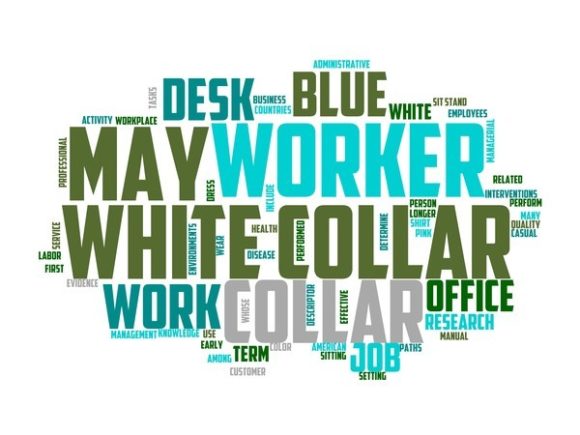
Office Worker Typography Tshirt
If you’ve ever scrolled through design marketplaces or craft supply sites looking for fresh, expressive apparel graphics, you’ve likely come across the Office Worker Typography Tshirt — a hand-drawn, colorful wordcloud built around themes of productivity, creativity, and professional life. It’s not just a shirt design. It’s a versatile visual toolkit: think coffee mugs with witty phrases, notebook covers layered with motivational verbs, or textile prints that turn workwear into conversation starters. What makes it special isn’t just its aesthetic — it’s how thoughtfully it bridges function and feeling for people who spend their days in meetings, spreadsheets, studios, or solo deep work.
What It Really Is (and Isn’t)
The Office Worker Typography Tshirt is a curated, scalable vector-based wordcloud — not a single static image. Each word is individually placed and styled by hand: no auto-generated layouts, no algorithmic spacing. You’ll find terms like “focus,” “collaborate,” “innovate,” “pause,” “plan,” and “breathe” woven together with organic flow, varied weights, and harmonious color palettes. Because it’s delivered as editable vector files (typically SVG and EPS) plus high-res PNGs, it adapts cleanly to screen printing, embroidery digitizing, sublimation, or digital mockups.
But here’s where confusion often starts: some buyers assume it’s *only* for t-shirts. Others treat it like clipart — dropping it onto a poster without adjusting scale, contrast, or context. Neither approach honors what the design was made to do. This wordcloud thrives when treated as a flexible *system*, not a one-off graphic.
Assuming All Wordclouds Are Equal
Not all wordclouds are created for real-world use. Many are generated automatically — words sized purely by frequency, stacked with rigid grids or chaotic overlap. The Office Worker Typography Tshirt avoids that trap. Its layout prioritizes readability at multiple sizes and balances visual weight so “teamwork” doesn’t visually drown out “clarity.” Before downloading or purchasing, zoom in on the preview: can you distinguish each word clearly at 30% scale? Does the spacing feel intentional, not cramped or arbitrary? If not, keep looking — or ask the creator for a test file.
Skipping Color Mode Checks
Here’s a quiet but costly oversight: using RGB files for physical print without conversion. That vibrant teal you love on screen may shift dramatically when printed on cotton using plastisol ink or DTG. Always verify whether your file package includes CMYK-ready versions — or at minimum, a Pantone reference guide. Better yet, request a physical swatch proof if ordering bulk apparel. One small check saves reprints, delays, and mismatched expectations.
Overlooking Licensing Scope
This wordcloud isn’t just for personal craft projects. Its license typically covers commercial use — meaning you *can* apply it to products you sell, from tote bags to webinar slide decks. But there are limits: most standard licenses prohibit reselling the design *as-is* (e.g., uploading the SVG to another marketplace), embedding it in SaaS platforms without extended rights, or using it as a primary logo without modification. Read the license summary carefully — not just the headline “commercial use.” When in doubt, email the creator. A quick reply beats a takedown notice.
Forgetting Contextual Fit
A beautiful wordcloud falls flat if it clashes with your brand voice or audience. Imagine slapping “hustle,” “grind,” and “crush it” onto a mindfulness coach’s workshop banner — the tone misfires. Likewise, using dense, tightly packed typography on a child’s learning journal defeats its purpose. Ask yourself: Who sees this? Where? For how long? For a conference badge, simplify to 5–7 core words. For a studio wall poster, lean into full detail and texture. Adapt — don’t default.
Practical Ways to Use It Well
- Start small, then scale: Test the design on a sticker or notebook cover before committing to apparel runs. See how colors hold up on your chosen material — kraft paper absorbs ink differently than glossy vinyl.
- Customize meaningfully: Swap one or two words to reflect your team’s actual values (“listen” instead of “pitch,” “reflect” instead of “ship”). Keep the hand-drawn integrity intact — avoid replacing fonts or flattening layers unless necessary.
- Pair with restraint: Let the wordcloud breathe. Avoid layering it over busy patterns or photo backgrounds. Use it on solid-color surfaces, subtle textures, or as a focal point surrounded by generous white (or negative) space.
- Repurpose intelligently: Break the cloud into subsets. Use “plan → do → review → improve” as a four-step process graphic in a training deck. Pull “curiosity,” “patience,” and “clarity” for educator thank-you cards. The design supports modular thinking — use it that way.
Before You Download, Print, or Pitch — Check This List
- File formats included: Do you need SVG for cutting machines? EPS for Adobe Illustrator? Transparent PNG for web? Confirm compatibility with your tools — not just your preferences.
- Scalability proof: Open the largest version in your design software and zoom to 400%. Are edges crisp? Are small words still legible? If letters blur or vanish, resolution may be insufficient for large-format printing.
- Color flexibility: Can you easily recolor individual words or groups? Are layers named and organized — or flattened into one uneditable blob?
- Creator credibility: Look beyond the thumbnail. Do they share process sketches? Real product photos (not just mockups)? Clear answers to licensing questions? Trust grows from transparency — not just polish.
- Your own timeline: If you’re designing for an event next month, allow buffer time for test prints, color adjustments, and vendor feedback. Rushing leads to compromises — and missed opportunities to make something truly resonant.
The Office Worker Typography Tshirt works best when treated as both inspiration and infrastructure — a starting point that invites thoughtful adaptation, not passive copying. Whether you’re a freelancer adding personality to client deliverables, a teacher brightening classroom walls, or a small business owner refreshing your merch line, its strength lies in how intentionally you meet it halfway. Choose wisely, test openly, customize respectfully, and let the words serve people — not just fill space.